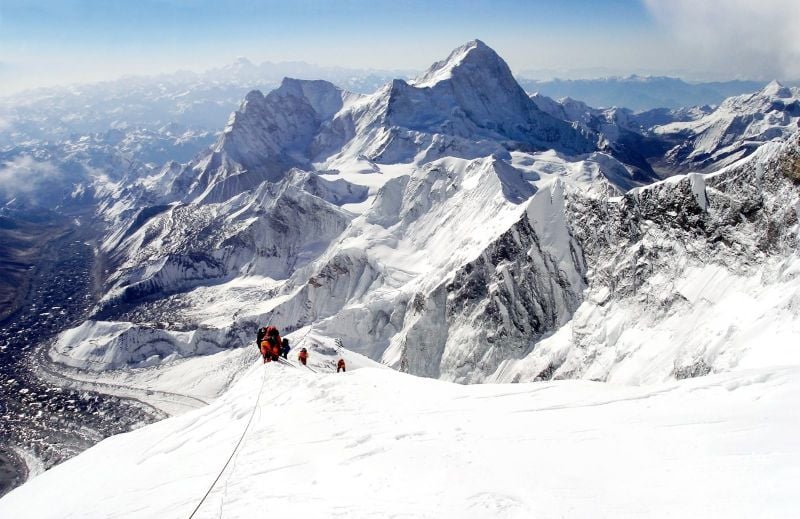
 Mountaineers climbing Everest, the highest mountain in the world.
Photo: iStock | sansubba
Mountaineers climbing Everest, the highest mountain in the world.
Photo: iStock | sansubba
THE 10 HIGHEST MOUNTAINS IN THE WORLD
The highest mountain in the world is Mount
Everest, sitting pretty at 8,848m in the Himalayas in Nepal. It's likely you
already knew that. After all, ask 100 people in the world to name a mountain,
and most will say Mount Everest. A lot of people also know that the second
highest mountain in the world is K2, on the China-Pakistan border, but far
fewer know that the third highest mountain in the world is called
Kangchenjunga. Or how to spell that. It’s not quite as simple as ‘K2’, that’s
for sure. So, how many of the highest mountains in the world do you really
know?
Everest tends to hog all the fame, but
actually, the entire continent of Asia is full of huge mountains. The top 100
tallest mountains in the world are all in Asia. None of the seven
summits - the highest mountains on each continent - are on this list except
Everest. It's actually quite rare to find someone who knows about the sixth,
seventh or eighth highest mountains in the world.
So let’s do this. Let’s help you learn the
top 10 highest mountains in the world. Let’s help you cheat in this pub quiz
you’re probably competing in right now, with your phone under the table,
connected to the dodgy Wi-Fi. Don’t feel bad. Everyone’s doing it. That team
with the dog were definitely cheating in the music round. Here are the 10
tallest mountains in the world - the planet's top ten highest mountains:
1. MOUNT EVEREST, HIMALAYAS, NEPAL/TIBET
AUTONOMOUS REGION, CHINA – 8848M
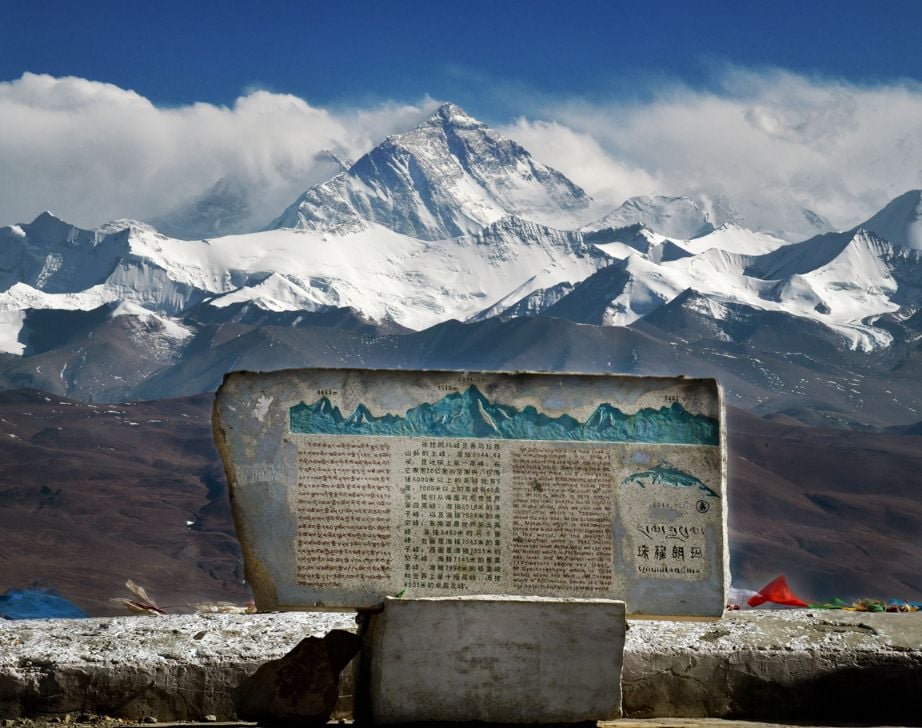
Arrival at first sight of Everest on a road trip through the
Himalayas of Tibet. Photo: iStock
First climbed by Sir Edmund Hillary and
Tenzing Norgay in 1953, Mount Everest is, of course, the highest mountain in
the world. Everest has come under a lot of scrutiny recently. Photographs
showing enormous queues near the summit have opened a huge debate about
overcrowding on Everest.
One thing’s for sure though, the inherent
draw of Mount Everest is not going to go away any time soon. Mankind is drawn
to the mountain like moths to a flame. As well as those looking to take the
route from Everest Base Camp to the summit, trekking to Everest Base Camp
itself is also hugely popular. In fact, it’s become one of the world’s most
famous multi-day treks.
P.S. If you are currently cheating at a pub quiz on the question “what is the highest mountain in the world?”, then we would suggest that it’s relatively unlikely you’re going to win the quiz. Unless you cheat a bunch more.
2. K2, KARAKORAM, PAKISTAN/CHINA – 8611M
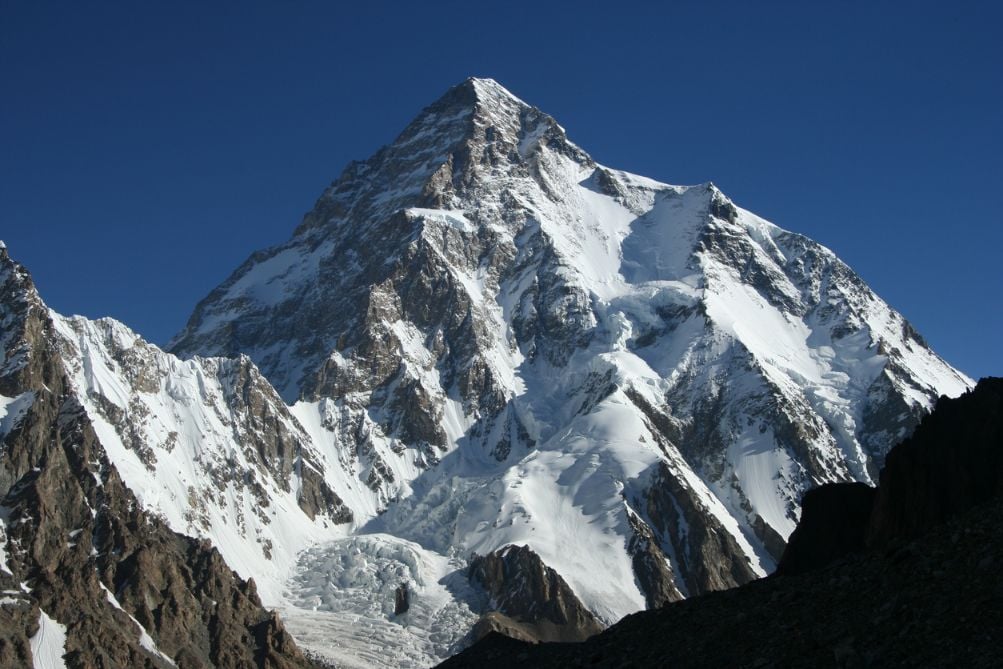
K2 mountain in Pakistan. Photo: iStock | e_wire
The second highest mountain in the world
is K2. The mountain took its name from the notation used by the Great
Trigonometrical Survey of British India. At the time, there wasn’t an apparent
local name for the mountain, and so it stuck. K2 is also nicknamed the ‘Savage
Mountain’, which is cool in a slightly Point Break, over-the-top extreme
kind of way. It is fitting, though, too.
The mountain is typically considered one of the toughest mountains in the world to climb, notoriously harder than Mount Everest, despite being the second tallest mountain in the world. K2 actually has the second-highest fatality rate per summit attempt of all mountains over 8000m, with around 300 successful summits and 77 deaths. The highest fatality rate is that of the tenth highest mountain in the world (spoiler alert), Annapurna I in Nepal. Unlike Annapurna though, K2 had never been summited in winter - until it happened this winter.
3. KANGCHENJUNGA, HIMALAYAS, NEPAL/INDIA
– 8586M
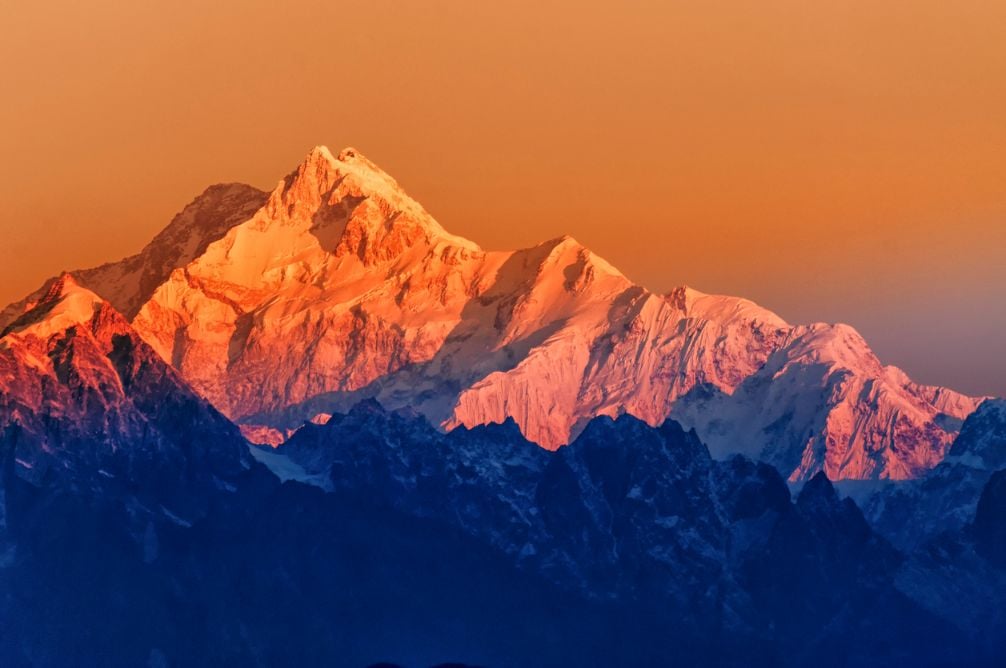
Sunrise on Mount
Kanchenjunga, Himalayan mountain range, Sikkim, India. The third highest
mountain in the world. Photo: iStock | RNMltra
So you knew Mount Everest was the highest
mountain in the world. You even knew K2 was the second highest. But we’re
betting if you asked most people what Kangchenjunga was, they’d guess it was
some kind of street food. It is not. Kangchenjunga is the third highest
mountain in the world. It can be found between Nepal and Sikkim in India, with
three of the peaks on the border and the other two in the Taplejung District of
Nepal.
This makes Kangchenjunga the highest peak
in India. The mountain was actually thought to be the highest mountain in the
world until 1852. This wasn’t because people didn’t know about Mount Everest,
but because they had done their calculations wrong. After further homework by
the Great Trigonometrical Survey of India, it was discovered that actually
Kangchenjunga was the third highest mountain in the world, and children around
the world breathed a sigh of relief that they would be primarily learning about
Mount Everest instead, a mountain which is significantly easier to both say and
spell.
4. LHOTSE, HIMALAYAS, NEPAL/TIBET
AUTONOMOUS REGION, CHINA – 8516M
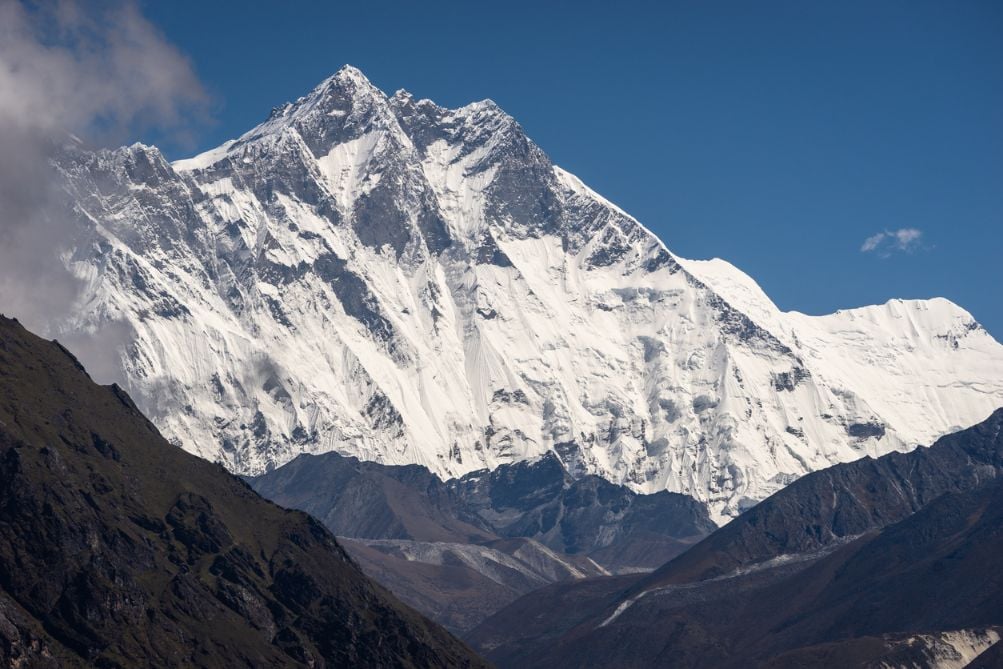
Lhotse mountain peak, fourth highest mountain in the world,
Himalayas mountain range, Nepal, Asia. Photos: iStock | Skazzjy
Lhotse is one of the more famous mountains
on any list of the top 10 highest mountains in the world, largely because of
its proximity to Mount Everest. The route up Lhotse is the same as that up
Mount Everest from Everest Base Camp until you pass Camp 3 and then depart to
the Reiss couloir from the Lhotse Face, from where the peak of Lhotse is
reached.
Lhotse is a little like the neglected younger sibling of Mount Everest. Everest gets all the attention while Lhotse, though often considered more visually attractive, is significantly less busy. While the main summit of Lhotse was first climbed in 1956, the Lhotse Middle actually remained the highest unclimbed, named point on Earth for decades. It was eventually first scaled in 2011 by a Russian expedition.
5. MAKALU, HIMALAYAS, NEPAL/TIBET
AUTONOMOUS REGION, CHINA – 8485M
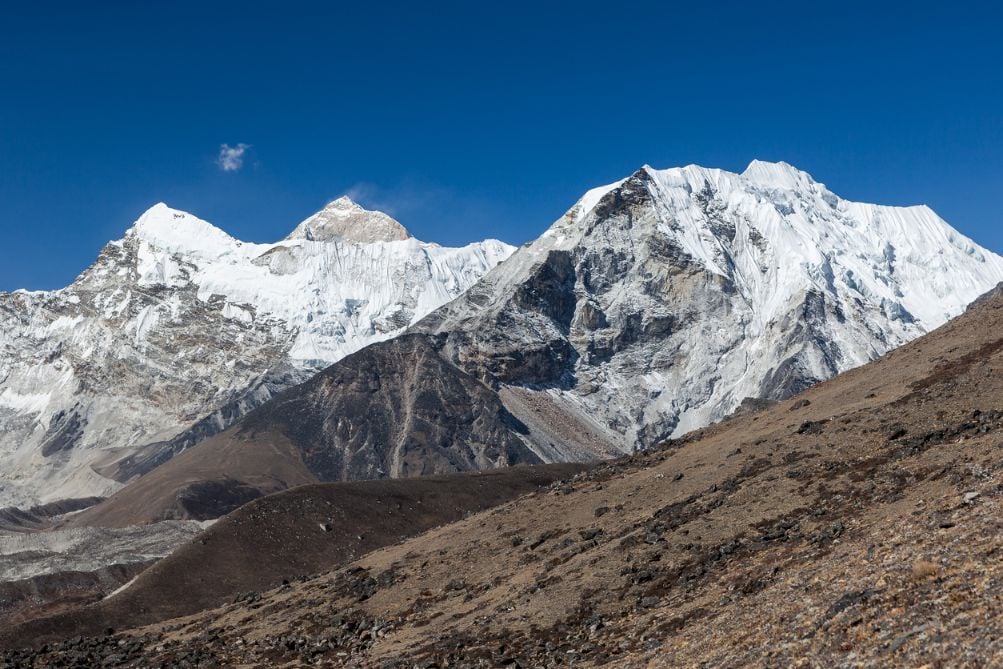
Imja Tse and
Makalu view on the way to Everest Base Camp in Sagarmatha National Park,
Himalayas, Nepal. Photo: iStock | gagarych
Makalu is the third of the four 8000m-high
mountains in the Everest Massif in Nepal. It was first summited by a French
expedition led by Jean Franco in 1955. Their ascent was most notable for the
fact that a full ten members of the expedition team summited the mountain on
the trip. In those days, it was normally only one or two climbers from each team
who reached the top of the mountain on an expedition, so this was a huge deal
at the time, and generally, it’s just quite nice, isn’t it? The first two
summited on 15 May 1955, then four more went up the next day, then four more
went up the day after that. Just very wholesome mountain climbing, really.
6. CHO OYU, HIMALAYAS, NEPAL/TIBET
AUTONOMOUS REGION, CHINA – 8188M
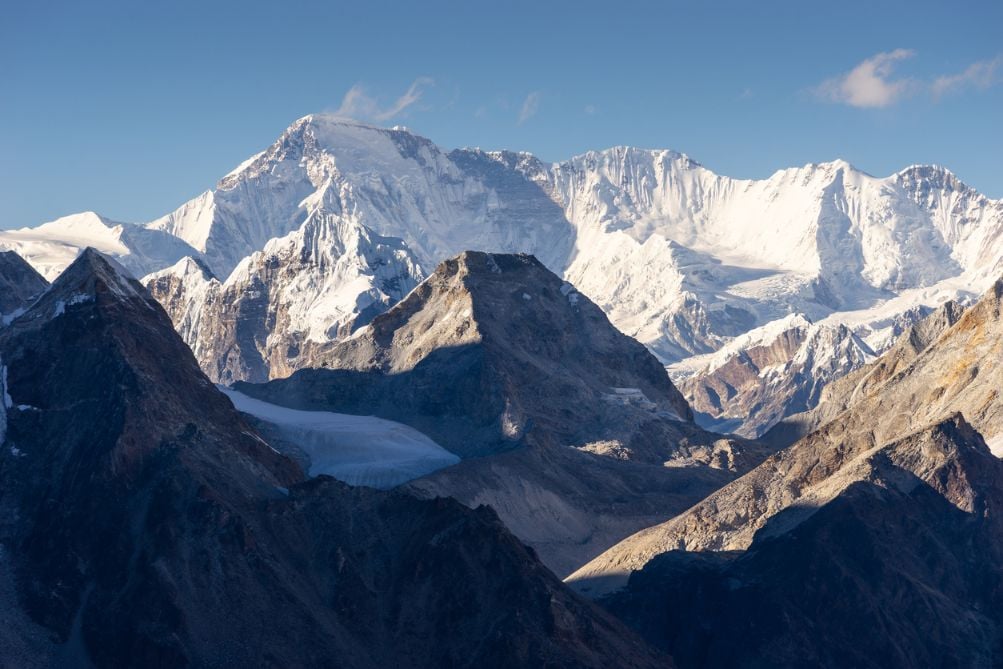
Cho Oyu mountain
peak, sixth highest peak in the world, Himalayas mountain range, Nepal, Asia.
Photo: iStock / Skazzjy
The fourth and final member of the Everest
region’s 8000m club is Cho Oyu. The sixth highest mountain in the world at
8188m, Cho Oyu is considered the easiest of the 8000m mountains to climb due to
the gentler slopes of the ascent. It’s also just a few kilometres away from the
Nangpa La pass, a major trading route between the Tibetan and Khumbu Sherpas.
If the four mountains in the Everest region over 8000m were in a boyband, Cho
Oyu would be the laid back, easy-going back-up singer. Not the most flamboyant
one, but probably the most relatable.
The mountain of the people. If you’re wondering, Lhotse would be the best vocalist, always getting its limelight stolen by Everest’s over-the-top hairstyles, and Makalu would be somewhere in the background just trying to make sure everyone got along. Weird analogy. We know. Let’s move swiftly on.
7. DHAULAGIRI, NEPAL – 8167M
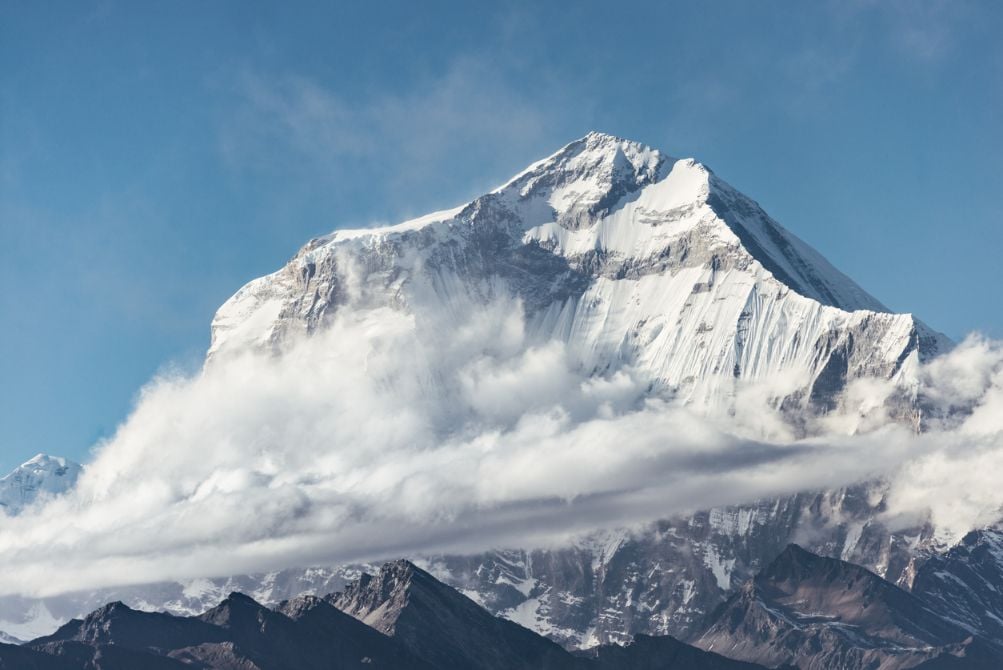
A close-up view
of Dhaulagiri in the Nepal Himalayas, the seventh highest mountain in the
world. Photo: iStock/shayes17
The Dhaulagiri in Nepal is the seventh
highest mountain in the world at 8167m, and one of the most aesthetically
stunning mountains of the lot. The Dhaulagiri was first climbed on 13 May 1960
but is perhaps best known for its visibility on the popular Annapurna
Circuit, with Annapurna I just 34km away and the Dhaulagiri a regular feature
on the skyline while trekking Annapurna.
The mountains are separated by the world’s
deepest gorge – the Kaligandaki Gorge – so it’s not a part of the world that’s
particularly struggling for scenery.
8. MANASLU, NEPAL – 8163M
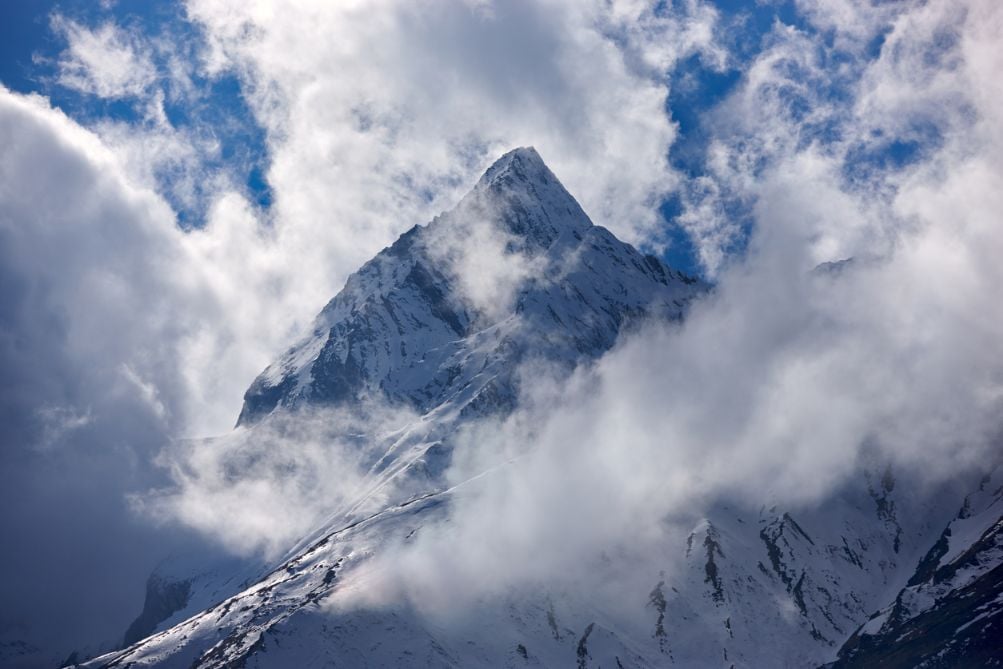
Manaslu, the eighth highest mountain in the world in the Himalaya
mountains. Photo: Photos: iStock/isoft
Manaslu is the eighth highest mountain in
the world, the name actually comes from the Sanskrit word ‘manasa’, which means
“intellect” or “soul”.
Manaslu was first scaled by Toshio Imanishi
and Gyalzen Norbu, who were part of a Japanese expedition which reached the top
of the mountain on 9 May 1956. Their ascent was controversial. Locals of the
area had prevented a Japanese team from reaching the top in 1954, believing
that previous attempts had displeased the Gods and caused avalanches that
destroyed a monastery in the area, killing 18 people. The Japanese made a
substantial donation to rebuild the monastery, but this didn’t restore goodwill
towards the expeditions and as a result, the second ascent of Manaslu didn’t
take place until 1971, when another Japanese team completed the ascent.
9. NANGA PARBAT, PAKISTAN – 8126M
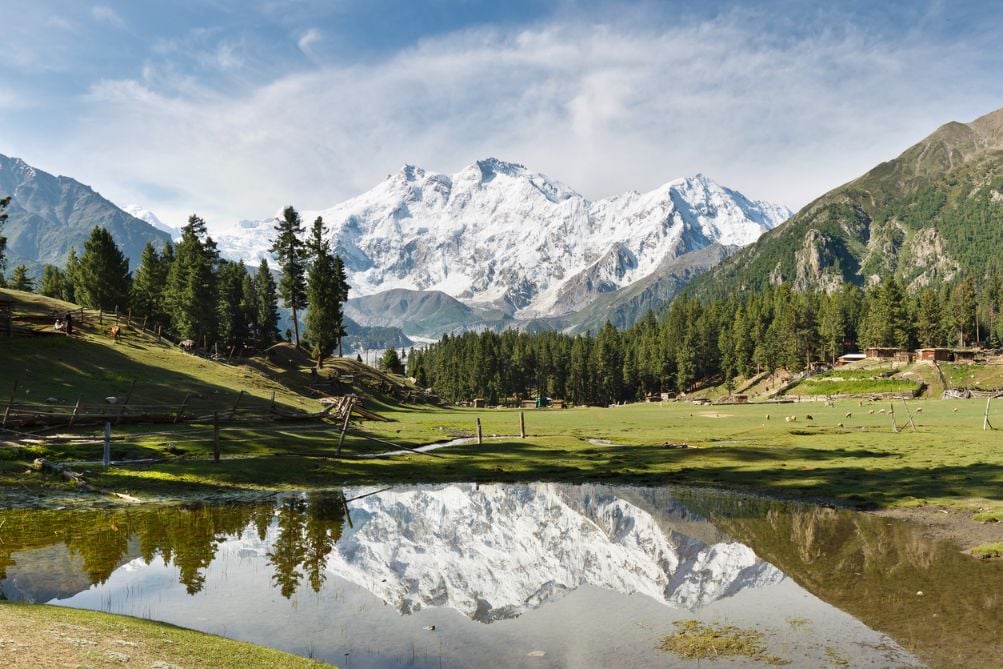
Nanga Parbat. The world’s ninth highest mountain. Photo:
iStock/Patrick Poendl
The ninth highest mountain in the world is
Nanga Parbat, in the Diamer District of Pakistan’s Gilgit Baltistan region in
the western Himalayas. Like many of the other mountains, the name comes from
Sanskrit, with ‘nanga’ and ‘parvata’ meaning ‘naked mountain’. The Tibetan name
for the mountain ‘Diamer’, meaning “huge mountain”, is maybe a bit more
appropriate (if a little lacking in creativity). Nanga Parbat truly towers over
the surrounding, low-lying valleys around it in every direction. The stunning
Rupal Face on the mountain rises a full 4,600m above its base and is often
called the highest mountain face in the world.
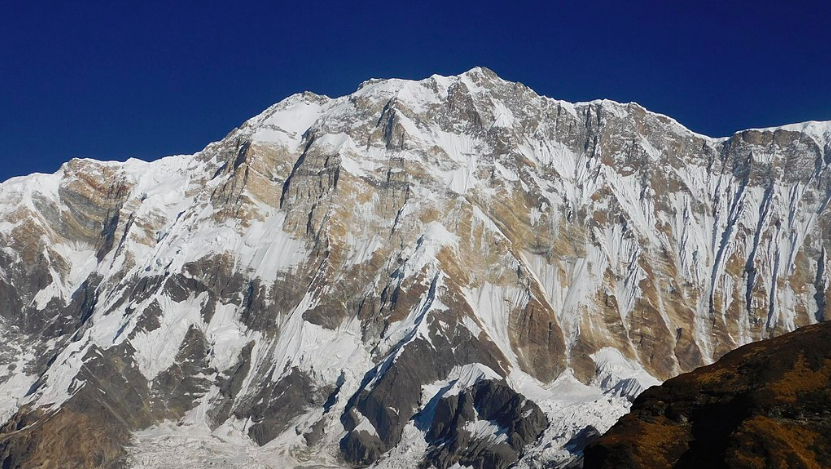
10. ANNAPURNA I, NEPAL – 8091M
 The south face of Annapurna I. Photo: Wiki Commons
Annapurna I in Nepal is the tenth highest
mountain in the world, and one of the most famous mountains on this list
courtesy of the fact that the trekking in Annapurna is truly
world-renowned. Annapurna I may be only the tenth highest mountain in the
world, but it actually has a higher fatality rate than any other mountain on
this list, with 32% of attempts to reach the top of the mountain resulting in a
fatality.
And there you have it! Those are the 10 highest mountains in the world. The 10 highest summits. An honourable mention must go out to the amazingly named Gasherbrum I (8080m) on the Pakistan–Chinese border, though. It’s the 11th highest mountain in the world and as such misses out on a place in this list, and on the fame and fortune that comes with it, by a mere 19 metres.

No comments:
Post a Comment